Queer AI: machine learning system dishes out fashion advice

Researchers at the University of Texas at Austin, working with researchers from Cornell Tech, Georgia Tech, and Facebook AI Research, have developed an AI system intended to assess photographs of outfits and offer fashion tips.

The tool, which has been named Fashion++, uses visual-recognition algorithms to analyse the key features of garments captured in a photograph, including colour, pattern, texture and shape. It then ranks small tweaks according to how much impact they could have on the overall appearance of the outfit, before presenting several options.

Suggested changes could include switching to a longer jacket or picking a sleeveless top.

“We thought of it like a friend giving you feedback,” said Professor Kristen Grauman, a computer science expert specialising in computer vision. “It’s also motivated by a practical idea: that we can work with a given outfit to make small changes so it’s just a bit better.”

Machine learning algorithms are trained using large datasets: in this case, photographs of both well-styled and poorly styled outfits. The researchers collected 10,000 images of outfits shared publicly online and mixed images of outfits to create mismatched composite images to form the ‘unfashionable’ dataset. This information was used to train the algorithm to recognise what makes a good outfit.

https://youtu.be/G9zBjapA3ic

Graduate student Kimberley Hsiao acknowledged that fashion – by its very nature – keeps changing, but that Fashion++ could continue to learn by being trained with new images.

Fashion++ is an imperfect tool; among other issues, it does not tend to recognise vintage looks as being stylish on account of the training images used being overwhelmingly focused on recent styles of clothing popular in the social media age. The tool also has a bias towards the type of clothing popular in North America.

Next, Grauman and Hsiao hope to train Fashion++ to recognise that different body shapes are flattered by different types of clothing. “We are examining the interaction between how a person’s body is shaped and how the clothing would suit them. We’re excited to broaden the applicability to people of all body sizes and shapes by doing this research,” Grauman said.

Emerging technologies such as AI, augmented reality (AR) and virtual reality (VR) are likely to play a large role in the future of fashion retail. The 2016 Future of Shopping report – which suggested how the ‘fourth industrial revolution’ could affect retail – predicted that VR shopping could threaten bricks-and-mortar retail by 2050, that drone delivery could become widespread, and that AI assistants could suggest purchases based on your preferences.

#entertainment #machinelearning #artificialintelligence #retail #clothing #
The Amazing Artists of the Special Olympics! 

When the 2022 Special Olympics USA Games organizers set out to design a logo for the event, they began in the traditional way of hiring a design firm. But in the process, they both realized something crucial was missing from the logo: the input of the athletes themselves!

For over 50 years, the Special Olympics has celebrated and supported the athletic and leadership talents of individuals with intellectual disabilities. Around the world, Special Olympics supports 5 million athletes with the help of 1 million volunteers and coaches. Now, as a new group of athletes looks forward to the 2022 USA Games in Orlando, Florida, they are getting the opportunity to shape the game to reflect their artistic talents as well!

Courtesy of the 2022 Special Olympics USA Games

Celebrating the Spirit of the Special Olympics

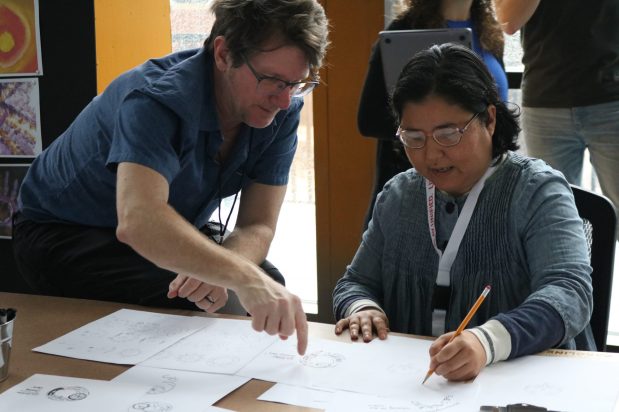
In order to come up with a logo that celebrated both the spirit of the Special Olympics athletes and the organization’s mission, they brought nine athletes from around the United States to Orlando for a design brainstorm.

Each of the participating athletes was an accomplished artist, from cake designers to painters and fashion designers. And when they brought those talents to the table to rethink what was possible with the creative team from Publicis Seattle, something spectacular happened. 1

Filmmaker Rayka Zehtabchi documented this beautiful collaboration in the marvelous short documentary United O. Take a watch…

If you want to see more from Rayka Zehtabchi check out her Vimeo page or website! She has some incredible work there that’s worth exploring if you have a few extra minutes!

“Even though I have an intellectual disability I can still do what everybody else does. It may be different.”
–Haley Waggoner, Athlete & Artist

How would our world look if we celebrated the unique talents and perspectives all people bring to the table?

What if we weren’t constrained because of our perceived limitations? What if, instead, we worked to find ways our unique experiences can inform a better world for everyone?

We would probably start solving problems we didn’t even know we had! And we’d be doing so in a way that touched more lives in a positive way.

If you are interested in checking out another article that celebrates people for their talents and not their limitations here’s a great story to dive into next!

Changing History With Sports!

Anybody who has ever attended or participated in a Special Olympics or Unified Sports event for themselves knows the kind of incredible energy they create. There’s a spirit of support, comradery, competition, and uplifting energy that can sometimes feel rare at a sporting event.

Special Olympics International has changed the lives of people with intellectual disabilities around the globe. Their activities allow athletes a place to grow, thrive, and lead. And it all started with the first International Special Olympics Summer Games in 1968. This event helped to solidify a movement to provide support and acceptance for people with intellectual disabilities.

But Special Olympics is more than the 100,000 competitions they put on each year in more than 170 countries. Special Olympics International has grown to include leadership training, health care, and educational resources. Their goal is to reach over 200 million people around the globe with intellectual disabilities. 3

So, here’s a great, short piece from the organization that takes a look at the incredible reach of their impact!

Via: Special Olympics 4

If you’re interested in getting involved with Special Olympics as an athlete, parent, coach, or volunteer, you can check out the Special Olympics website to learn about opportunities near you. Oh, and the 2022 USA Games are approaching as well! So, to learn more about how you can get involved there, jump over to their site, or follow them on FacebookTwitter, or Instagram!

Whether you’re an athlete, volunteer or coach, being a part of something bigger than yourself—something that gives back so much to their members—can really change how you see the world.

When we find ways to celebrate our unique skills and abilities we all win!

Imagine the possibilities if we celebrated the talents people bring to the table more often.

Stay beautiful & keep laughing!

– Piyali Samant.

Where is Technology Bringing Us?

We hope you haven’t missed these inspiring. . new innovations!

From Bill Gates drinking sewage water, to devices that use the tongue as “eyes”, and even cell phones that are saving the rainforest, you’ll be sure to find something amazing in this selection of articles about the innovations that are moving our society forward. (Don’t worry, there’s so much more in our archives!)

Meet a few of the innovators in our #ConspiracyofGoodness initiative by clicking here!

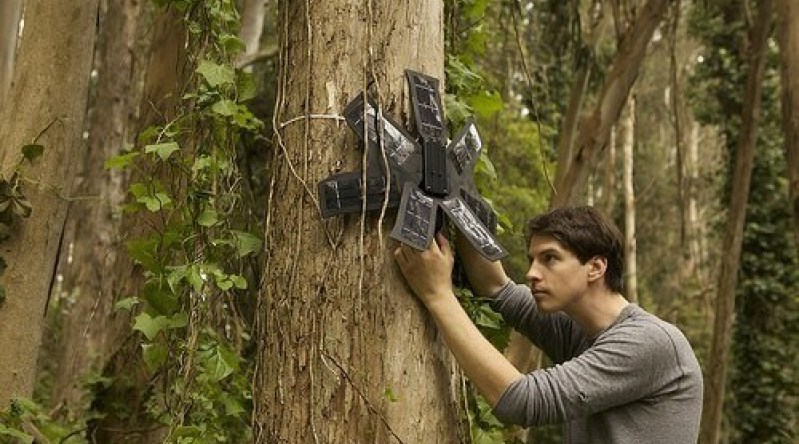
Saving the Rainforest with Old Cell Phones

Rainforest Connection is saving the rainforest with something sitting in your desk drawer!

Rainforests have some of the most complicated soundscapes on the planet. In this dense noise of insectsprimatesbirds, and everything else that moves in the forest, how can you detect the sounds of illegal logging?

The old cell phone you have hanging around and collecting dust may have the answer.

Source: Rainforest Connection

So, how exactly does one go about saving the rainforest with old cell phones?

After a visit to the rainforests of Borneo, physicist and engineer Topher White was struck by the sounds of the forest. In particular, the noises he couldn’t hear.

While on a walk, White and others came across an illegal logger sawing down a tree just a few hundred meters away from a ranger station.

This incident set White thinking that perhaps the best way to save the Earth’s precious rainforest is to listen to its loggers and poachers. And the innovation he came up with uses old cell phones to do this!

To introduce us to the innovation he came up with, here is Topher White on the National Geographic Live stage. National Geographic is promoting some incredible things, so go check them out to see what they’ve been up to lately!

You can learn more about Rainforest Connection (and listen to the sounds of the rainforest) over on their website! To stay up to date with their work, make sure you give them a follow on FacebookTwitterInstagram, and YouTube!

Great people becoming empowered to make a difference…

It’s hard to feel like our actions have an impact on solving a problem like deforestation. Yeah, we can choose to change our spending habits to stop the economic support of deforestation, but this doesn’t necessarily have an impact at the root of the problem.

We can, though, choose to support projects like Rainforest Connection!


Learn more about the Conspiracy of Goodness happening around the world by clicking here!


If you have an old cell phone you want to give a second life saving the rainforest, you can send it to Rainforest Connection, and if the device doesn’t work for their needs, the donation will still go to supporting the project. You can check out how you can get involved with this project over on the Rainforest Connection website.

Perhaps it is time to change the narrative about saving the planet.

We need to feel empowered and the more we understand how our small actions can have an enormous impact, the more we engage others to do the same.

Stay beautiful & keep laughing!

– Piyali Samant

The Virtual Reality Environment

Other sensory output from the VE system should adjust in real time as a user explores the environment. If the environment incorporates 3-D sound, the user must be convinced that the sound’s orientation shifts in a natural way as he maneuvers through the environment. Sensory stimulation must be consistent if a user is to feel immersed within a VE. If the VE shows a perfectly still scene, you wouldn’t expect to feel gale-force winds. Likewise, if the VE puts you in the middle of a hurricane, you wouldn’t expect to feel a gentle breeze or detect the scent of roses.

Lag time between when a user acts and when the virtual environment reflects that action is called latency. Latency usually refers to the delay between the time a user turns his head or moves his eyes and the change in the point of view, though the term can also be used for a lag in other sensory outputs. Studies with flight simulators show that humans can detect a latency of more than 50 milliseconds. When a user detects latency, it causes him to become aware of being in an artificial environment and destroys the sense of immersion

An immersive experience suffers if a user becomes aware of the real world around him. Truly immersive experiences make the user forget his real surroundings, effectively causing the computer to become a non entity. In order to reach the goal of true immersion, developers have to come up with input methods that are more natural for users. As long as a user is aware of the interaction device, he is not truly immersed.

In the next section, we’ll look at the other facet of telepresence: interactivity.

REAL VIRTUAL OBJECTS AND GOING FOR A SWIM

Passive haptics are one way VE developers have tried to enhance interactivity. Passive haptics are real objects in a physical space that are mapped to virtual objects in a virtual space. Users wear an HMD or similar portable display while in the physical space. When they look toward the physical object, they’ll see the virtual representation of it in their display. When they approach the object and try to touch it, they encounter the real object in the physical space. Anything a user does with that object in real space appears as a reflected action upon the virtual object in virtual space.

Swimming in VR systems doesn’t refer to jumping into a pool — it describes the effect of latency within a virtual environment. If you were to look around in a VE and notice that the change in point of view was not instantaneous, you would experience swimming. The effect is distracting and can even make you experience motion sickness, called simsickness or cybersickness in VR circles.

Virtual Reality Immersion

A virtual reality unit that allows the user to move freely in any direction

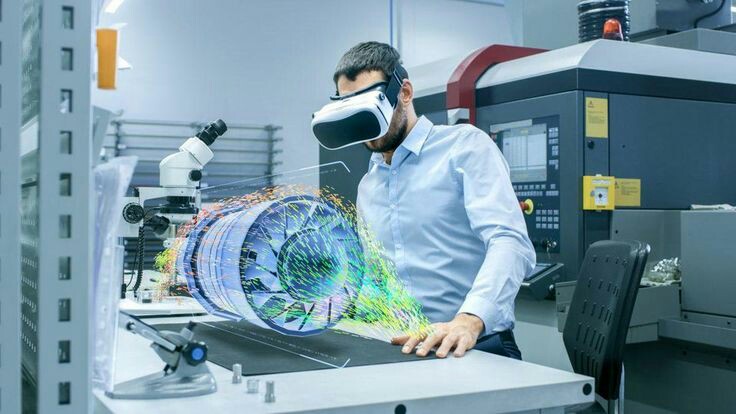
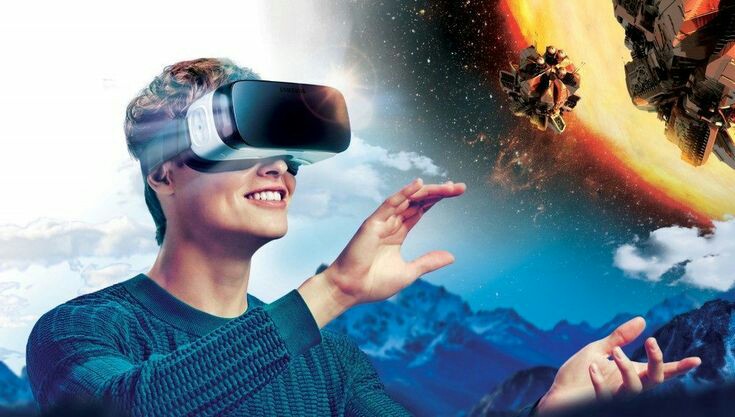
In a virtual reality environment, a user experiences immersion , , or the feeling of being inside and a part of that world. He is also able to interact with his environment in meaningful ways. The combination of a sense of immersion and interactivity is called telepresence. Computer scientist Jonathan Steuer defined it as “the extent to which one feels present in the mediated environment, rather than in the immediate physical environment.” In other words, an effective VR experience causes you to become unaware of your real surroundings and focus on your existence inside the virtual environment.

Jonathan Steuer proposed two main components of immersion: depth of information and breadth of informatio. Depth of information refers to the amount and quality of data in the signals a user receives when interacting in a virtual environment. For the user, this could refer to a display’s resolution, the complexity of the environment’s graphics, the sophistication of the system’s audio output, et cetera. Steuer defines breadth of information as the “number of sensory dimensions simultaneously presented.” A virtual environment experience has a wide breadth of information if it stimulates all your senses. Most virtual environment experiences prioritize visual and audio components over other sensory-stimulating factors, but a growing number of scientists and engineers are looking into ways to incorporate a users’ sense of touch. Systems that give a user force feedback and touch interaction are called haptic systems.

For immersion to be effective, a user must be able to explore what appears to be a life-sized virtual environment and be able to change perspectives seamlessly. If the virtual environment consists of a single pedestal in the middle of a room, a user should be able to view the pedestal from any angle and the point of view should shift according to where the user is looking. Dr. Frederick Brooks, a pioneer in VR technology and theory, says that displays must project a frame rate of at least 20 – 30 frames per second in order to create a convincing user experience.

What’s in a name?

Virtual reality has gone by many other names besides virtual environments. Other terms for virtual reality include cyberspace (a word invented by science fiction author William Gibson), artificial reality, augmented reality and telepresence.

How Virtual Reality Works

What do you think of when you hear the words virtual reality (VR)? Do you imagine someone wearing a clunky helmet attached to a computer with a thick cable? Do visions of crudely rendered pterodactyls haunt you? Do you think of Neo and Morpheus traipsing about the Matrix? Or do you wince at the term, wishing it would just go away?

If the last applies to you, you’re likely a computer scientist or engineer, many of whom now avoid the words virtual reality even while they work on technologies most of us associate with VR. Today, you’re more likely to hear someone use the words virtual environment (VE) to refer to what the public knows as virtual reality. We’ll use the terms interchangeably in this article.

Naming discrepancies aside, the concept remains the same – using computer technology to create a simulated, three-dimensional world that a user can manipulate and explore while feeling as if he were in that world. Scientists, theorists and engineers have designed dozens of devices and applications to achieve this goal. Opinions differ on what exactly constitutes a true VR experience, but in general it should include:

> Three-dimensional images that appear to be life-sized from the perspective of the user
> The ability to track a user’s motions, particula­rly his head and eye movements, and correspondingly adjust the images on the user’s display to reflect the change in perspective

In this article, we’ll look at the defining characteristics of VR, some of the technology used in VR systems, a few of its applications, some concerns about virtual reality and a brief history of the discipline. In the next section, we’ll look at how experts define virtual environments, starting with immersion.

How Virtual Reality works?

What’s the Deal with Virtual Reality?

Has all the hype about virtual reality intrigued you? What’s going on with this virtual reality stuff anyway?

By now, virtual reality (VR) has probably made it on to your radar screen in some way. Maybe you’ve only heard about it in bits and pieces, or maybe you’ve tried it yourself. Whatever the case, virtual reality feels like it could be the new generation of advanced technology.

So, what’s going on with virtual reality? How does it work? What impact is it having on your brain?

Though I have tried a virtual reality headset before, I realized I really didn’t know that much about it, or what is possible with this technology. I’d never really had virtual reality explained to me in a way I was able to understand.

So, I decided to look into it and found a great video from one of our favorite YouTube channels, The Good Stuff, that takes us into the world of virtual reality, exploring its history, psychology, and why it’s so darn fun!

How real is virtual reality?

So what do you think, would you give VR a try?

Now, you may have been thinking to yourself how isolating virtual reality seems. As fun as it is to watch your friend crawl around your living room with funny goggles on their face, wouldn’t VR be much more fun if more people could be involved and experiencing the same thing?

Luckily, I wasn’t the only one with this line of thought, and The Good Stuff created another great video in their series exploring VR that tackles the ultimate in virtual reality, creating a real life Holodeck.

A New Generation of Uses

I am most excited by all the possibilities that advanced technology like virtual reality present. The opportunities for connecting people across cultures, bringing worlds wonders to our homes, enriching the teaching power of classrooms, and so much more are boundless.

We are only in the early stages when it comes to fleshing out the broader applications for VR, and where it ends up taking us is unimaginable. It is fascinating to think about where this kind of technology will take us in the next 100 years, and the innovative thinkers that will move us forward.

Another beauty of Virtual Reality? It isn’t just for kids. Spend a little time with this article to see a wonderful video on how it can help us revisit our memories.

Stay beautiful & keep laughing!

– Piyali samant

Virtual Reality Isn’t Just for the Kids!

Virtual Reality isn’t just taking us to new places! Very soon, you’ll consider VR a bridge to the best parts of your past!

Most of us automatically jump to the idea that this system is used purely for gaming purposes, but what if we told you that it’s currently being utilized in nursing homes to increase the quality of life for the older generation? Today, we see this in action.

“You’re getting to relive a moment in time that you’ve had in your life that you can no longer access because you can’t get there physically. It’s really great to be a part of empowering someone with happiness and joy, that’s amazing!” — Nathan Windsor

What kind of window will the ability to explore anywhere in the world (or out of this world!) from the comfort and safety of our homes open?

Paul Hairston, of Acres production put together this video titled Leo and Laura that showcases the beautiful way this technology can impact someones life. what are your thoughts on the possibilities of these virtual reality systems?

We now have the ability to safely “be” anywhere or do anything that we’d like from our home, but do you think this will be a positive advancement for the human race?

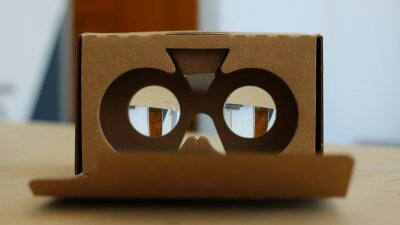
Source: Maurizio Pesce // Flickr Google Cardboard is a more affordable virtual reality option, with some editions coming in at just $15, opposed to other systems that are in high hundreds!

Could it be possible that this technology will lead us all to become shut ins living in a virtual world on our couches, or will it actually inspire more people to get out there and have new real world experiences since they now have a better idea of what will be in store for them? And how will it effect those of us, like Leo and Laura, who for any variety of reasons don’t have the ability to go out into the world and physically have these experiences? For example, how would someone in a wheelchair feel about virtually walking through a city? Or climbing a mountain?

While you’re thinking on that, check out our past article to learn more about how the technology behind virtual reality systems actually works and hear more hands on experiences!

Keep yourself open to new possibilities and happiness will stay near by!

– Piyali Samant

Design a site like this with WordPress.com
Get started